
Implementing VKS on VCF: An architecture guide
I had the pleasure of being invited to be a guest on the VMware Podcast vBarbeque talking about VKS on VCF.
I had the pleasure of being invited to be a guest on the VMware Podcast vBarbeque talking about VKS on VCF.
Kubernetes has become the standard platform for running containerized applications, but Kubernetes itself is only part of the story. Organizations still need to decide where Kubernetes runs, how clusters are managed, how networking and storage are provided, and who is…
As organizations modernize their application portfolios, Kubernetes has become the de facto platform for deploying and operating cloud-native applications. The challenge for many enterprises is not whether to adopt Kubernetes, but how to do so without creating additional infrastructure silos,…
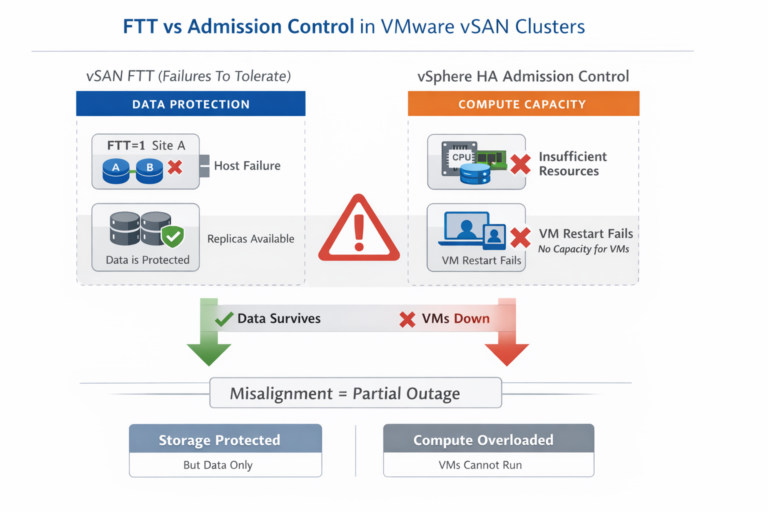
Designing for FTT=1 and STT=1 Without Creating Hidden Risk vSAN Stretched Clusters are often positioned as the pinnacle of on‑premises availability design: two active data centers, synchronous storage replication, and automated recovery. Yet in practice, many stretched clusters fail not…
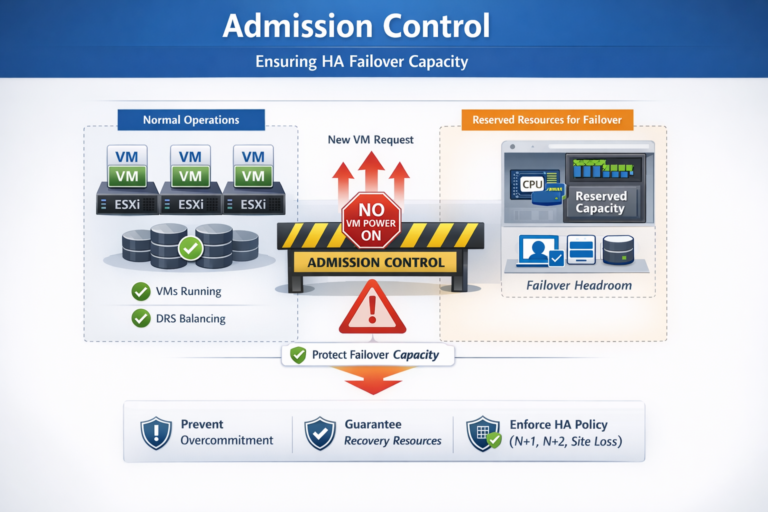
Admission Control is the policy engine within VMware vSphere HA that enforces survivability guarantees.Its purpose is not performance optimization—it is risk containment. Admission Control ensures that the cluster never commits more compute resources than it can safely recover after a defined failure…

VMware stretched clusters are frequently treated as the gold standard of availability design. They promise zero recovery point objective, automated failover, and the comforting idea that an entire site can disappear without anyone noticing. In presentation decks and architecture diagrams,…
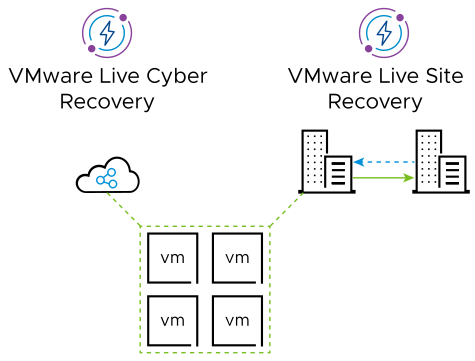
Designing a modern VMware availability and disaster recovery strategy often feels like a forced choice between two competing priorities: achieving near-zero downtime or protecting workloads across long geographic distances. VMware Stretched Clusters are exceptionally effective at delivering continuous availability across…

Few terms in enterprise IT are used as loosely as hybrid cloud. For some, it simply means “we still have data centers.” For others, it’s a transitional state—on the way to being “fully cloud.” In boardrooms, the term is often…